Periscope towards the past, in Dún Laoghaire

The winds of change are swirling through Dún Laoghaire. This harbour town, home to a mailboat servicing Dublin to Holyhead for over 170 years, recently lost its only ferry service, which served the same route. Plans are afoot for an artificial beach and floating river barge containing a heated swimming pool of treated seawater. The harbour company has sought planning permission to replace the old ferry terminal with a berth for large cruise ships. A diaspora museum is among cultural plans for the old Carlisle pier. These might banish the slightly abandoned feel that consumes some of a seafront that perhaps should be bustling.

Part of the town’s future appeal to visitors interested in its maritime identity might be the national maritime museum. A minute’s walk from the seafront, this museum is housed in a former mariners’ church built in 1837 to serve the seafaring community. The venue is ideal: large, wide, bright, unusual, and two-storeyed. Within these four, former hallowed walls, the Maritime Institute of Ireland (which manages the museum) provide exhibitions on the lives and equipment of those who have worked on the waters throughout the ages. It houses exhibits on everything from the Irish Navy, to mariners’ old apparatuses and clothing, to old boat types.

Of topical interest are the exhibitions on infamous sinkings. Most topical is that on RMS Lusitania, which was torpedoed by a German U-boat in mysterious circumstances one hundred years ago this month. 1,198 lost their lives. The RMS Leinster, the mailboat that travelled between Dún Laoghaire (then Kingstown) and Liverpool, was also torpedoed by a German submarine. Over 500 were killed when it sank in 1918. The museum also documents the RMS Titanic, which had several Irish connections, and details of the tragedy that cost 1,513 lives in a contemporaneous shipping insurance company’s log.

A small but striking object upstairs is ‘the real map of Ireland’. The visual and factual details of Ireland’s seabed territory are surprising. Exploration of all that exists within this vast expanse, mainly to the west of the island, and the potential for ‘blue’ growth, are themes tourists are likely to learn more about when visiting Irish maritime museums in years ahead.

Open daily from 11-5, the museum provides a brief history of Dún Laoghaire’s maritime past, but more could be given. There is also great potential to spruce up the artefacts exhibitions and to re-tell the stories of those who lived or found refuge in this maritime town. Tourist attractions like this usually depend upon volunteers to maintain them and its helpers’ efforts to refresh and communicate are evident. Yet the shipping, boating and maritime worlds continue to evolve. Dún Laoghaire is a case in point. The curators are spoilt for choice.

Posted in Tourist attraction reviews | Tagged , , , , | Leave a comment

The 300-year old page turner

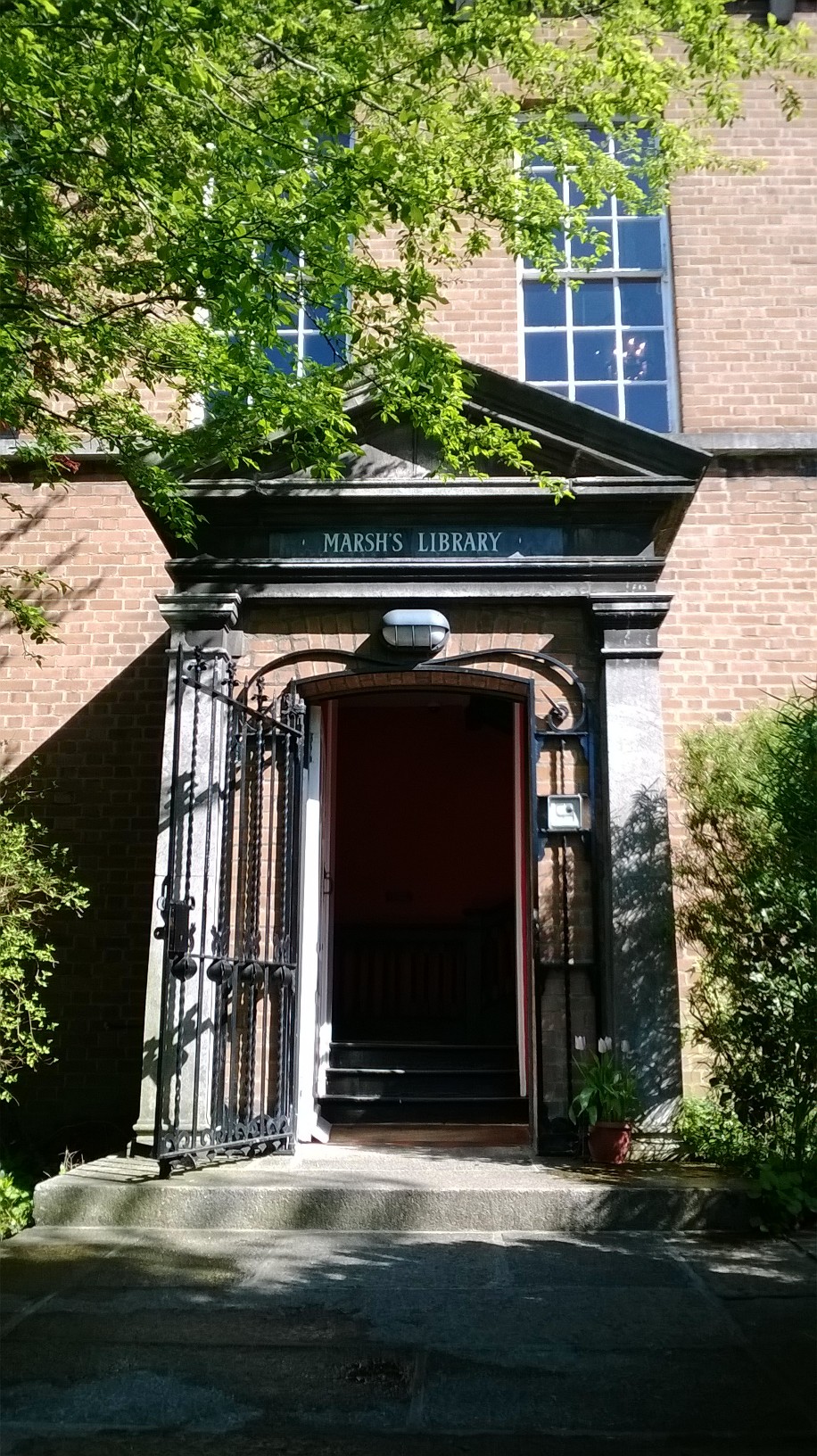
Marsh's LibraryOld museums and libraries with little if any turnover of materials face an on-going, major challenge. They need to remain relevant, retain some feeling of life and modernity, and find a way to coax old visitors back.

Tucked in behind St Patrick’s Cathedral in Dublin city, Marsh’s Library faces such a challenge. Commissioned by the then Church of Ireland archbishop of Dublin Narcissus Marsh, the library has been open in 1707 and has accumulated thousands of important 15-18th century books, of which about 300 are over 600 years old. Its oldest work, by Cicero, dates from 1472. No books within its four hallowed walls are less than 200 years old.

Gladly, Ireland’s oldest public library, which attracts about 12,000 visitors each year, seems to recognise the need to do more than allure visitors to its tranquil atmosphere and the aroma of old books. At present, it is offering visitors two exhibitions: a collection of the books James Joyce read there in 1902; and another of Jewish books, mainly from the 17th century.

Dublin’s most famous writer used the library to read about diverse topics that subsequently influenced his work. Joyce read about the Franciscan order, its influential monk Joachim of Fiore, and about the order’s Irish monks who fled to Europe. He also read Plutarch and Dante there, as well as The Decameron. In the exhibition, these books are displayed in glass cases with explanatory texts on their influence on his work. If proof is needed of the influence of these books and the library on the writer, it’s in the citing of Marsh’s Library in Stephen Hero, Ulysses and Finnegan’s Wake. ‘James Joyce, Apocalypse and Exile’ runs until Bloomsday 2015.

The ‘From Lublin to Dublin’ exhibition showcases old, Jewish books with their title page displayed, some with the personal motto (in Greek) of Archbishop Marsh. The books are accompanied by descriptions of their binding (some are re-backed), marginalia and annotations, though more detail of their contents or history could be provided.

An interesting feature inside the library is the map on display of St Patrick’s Cathedral’s surroundings in the 1750s. It illustrates the expanse of the ecclesiastical world at the time and its now archaic lexicon, for example, the prebendary of Clonmethan’s manse.

The sense of history and time is evident among the 10,000 books of all shapes and sizes in the first gallery. You feel it in the old reading room where scholars like Joyce and Bram Stoker read among the 2,200 books there, brought to Ireland by Huguenot Elias Bouhéreau in 1686. It permeates the second gallery of books, which houses the personal collections of Archbishop Marsh and Bishop of Clogher John Stearne, and in the small caged reading rooms, installed in the late eighteenth century to quarantine readers consulting small books that might have been easily stolen.

As you walk among these tall shelves defined by old wood and books, the sound of the cathedral’s distant bells completes the experience. Ireland’s oldest public library continues to allure.


Posted in Uncategorized | Tagged , , , , | Leave a comment

Turning on and tuning in at the hurdy gurdy

Inside the Hurdy Gurdy vintage radio museum

Inside the Hurdy Gurdy vintage radio museum

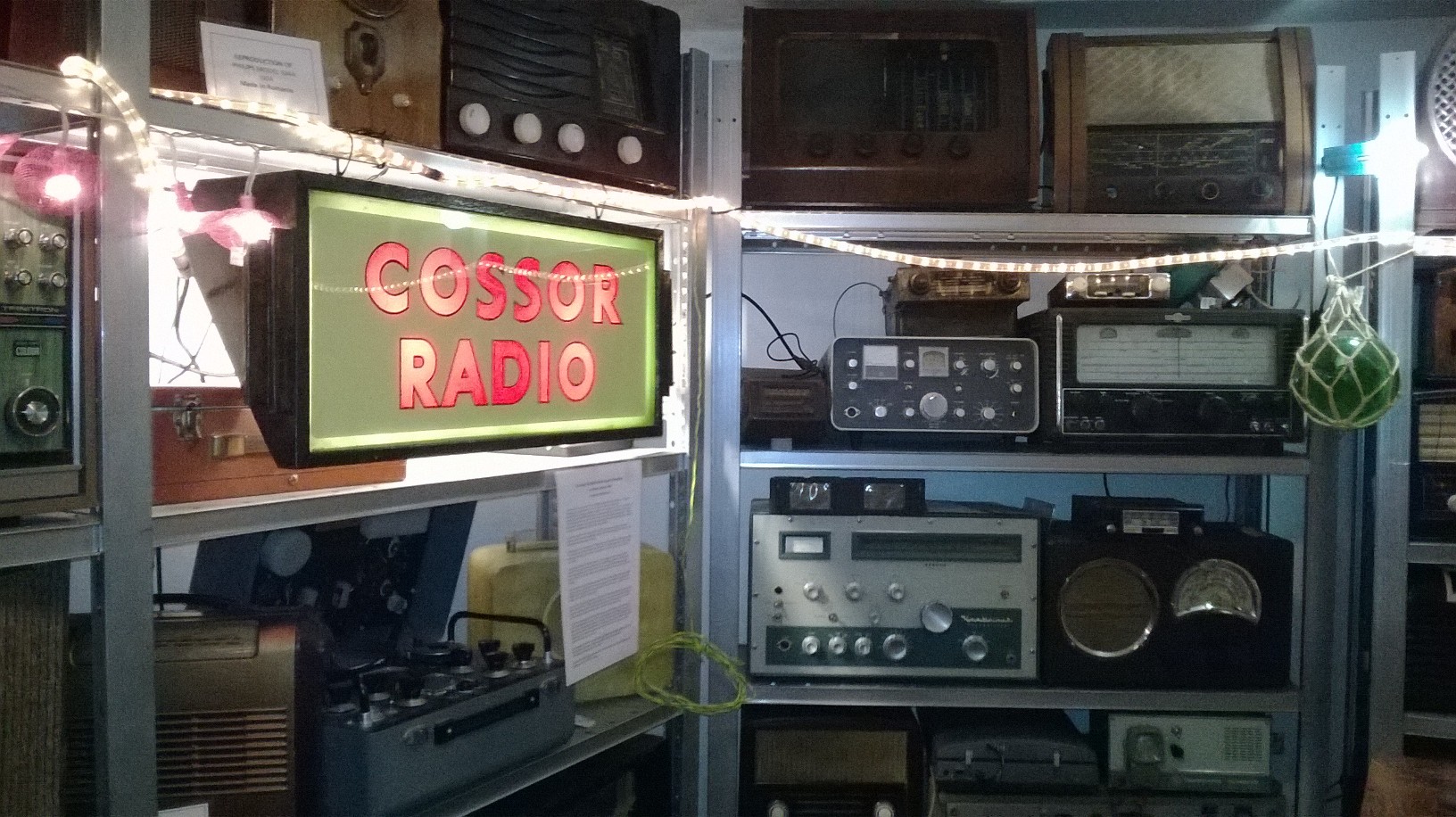
For many tourists in Dublin on these sunny, spring days, a visit to Howth for its coastal walks, views and fresh fish and chips is on the radar. Some will also make the pilgrimage there this weekend for International Marconi Day, when radio and technology enthusiasts remember the oft-cited father of radio and pioneer of wireless telegraphy. They will be making their way to the highly enjoyable ‘Hurdy Gurdy Radio Museum’, the vintage radio museum in Martello Tower North #2 of the peninsula.

Innovations like Marconi’s concerning long-distance radio transmission will be documented there next weekend, as they are every weekend. It was in this tower in 1905 that a Marconi station was installed to test a series of signals between the telegraphy station and H.M. Monarch, a telegraph ship travelling between Howth and Holyhead. These days, the tower is a two-storey collection of radios, gramophones and other radio-related paraphernalia collected by amateur curator and lover of radio Pat Herbert, over fifty years.

On a guided tour of the museum, that probably lasts as long as visitors’ interest dictates, visitors are treated to energetic accounts of the major innovations along the journey of communications development. From basic signals to mechanical and electrical devices, to the wireless systems that paved the way for radio broadcasting in the 1920s, the museum marks the milestones.

The tour tells of the inventors and their stories. There are details of the 19th century achievements of Samuel Morse. There is the story of rivalry between engineers Thomas Edison and Nikola Tusla through their respective contributions to direct current (DC) and alternating current (AC) electricity systems (and the intriguing events after the latter’s death). There is the association of Howth with another father of radio, Lee de Forest. This inventor of the system that led to sound on motion pictures also conducted successful wireless transmission tests between Howth and Holyhead in 1903. Tales of the clamour to patent inventions weave through many of the stories.

Communications equipment of all sizes and ages are found in the museum’s cluttered rooms. One cannot avoid being struck by not just how communications have evolved and human kind’s innovating spirit, but by the passion of those who keep this museum (open daily from 01 May) going. It was borne out of a labour of love, and is sustained by it, along with other voluntary staff, recruited through community employment schemes. One senses the passion in the squeezing of objects into every crevice of these wonderfully nerdish, time-warped rooms. One feels it in the tour guides’ jam-packed sentences.

Pat Herbert’s love of radio grew out of listening to an All-Ireland football final on radio in the west of Ireland in 1947. The game was played in New York, the broadcasting technology possible through achievements such as Marconi’s wireless reporting of the America’s Cup yacht race some forty-eight years earlier. For radio enthusiasts, the idea behind Marconi Day is to keep the spirit of invention alive. Still informing, collecting, adapting, still making point-to-point contact with places near and afar, the ‘Hurdy Gurdy’ would do Marconi proud.

Posted in Uncategorized | Tagged , | Leave a comment

Putting its own stamp on history

It’s Easter Week and many visitors to Dublin are undoubtedly strolling along O’Connell Street for a look at the building that made the headlines this week ninety nine years ago. The General Post Office’s Portland stone portico and Ionic columns is now synonymous with Ireland’s Easter Rising, yet it has also been Ireland’s general post office for 197 years. Within its four walls a pleasant, small museum tells the history of the building and Ireland’s postal services.

The museum is divided into exhibitions on three themes: letters, lives and liberty. The first section covers the art of the stamp and includes collections from different countries, pointing out that stamps reflect the political changes of a state. Among the exhibits is the new Irish State’s 1 penny stamp of the map of Ireland, from 1923, as well as designs produced by RJ King a year earlier. King produced a collection that included a stamp of St Patrick, the Four Courts, the Custom House, the Bank of Ireland and the GPO. The design of the national saint stamp endured 15 years of waiting before it finally went to print.

This section also provides an interactive screen that allows visitors design their own stamp. What is the theme of a stamp? Is it about nature, a people’s tradition or an anniversary? Questions about the theme, lines, shape, colour and proportion of a stamp’s  design are explored. Every year, An Post produces about forty new stamps, covering up to twenty different topics.

Ireland’s postal system’s evolution is documented in ‘Lives’. It explains the links between social and technological developments and advances in communications, for example, the impact of arrival of primary school education in the 19th century. As communications developed so did the postal service. In 1916, it had 488,270 active savings accounts and 26,288 phone accounts; facilitated 5,397,000 telegrams and millions of old age pension payments. Exhibits such as the telephone exchange illustrate how much things have changed.

‘Liberty’ covers the events of 1916 and provides a perspective that one wouldn’t normally consider: the staff working in the GPO who were confronted by the rebels. The building was open on that bank holiday Easter Monday, with reduced staff on duty to keep essential services open for the public. Just after midday, the men who’d gathered earlier at Liberty Hall entered and ordered staff and customers to leave.

If you’ve an hour free and are near O’Connell Street, this inexpensive museum tour is worthwhile. Ireland has had a basic postal service since 1651, and here you will get a taste of everything that’s been in the mail bag.

Posted in Tourist attraction reviews | Tagged , , , , | Leave a comment

Shedding light on the bank with few windows

For most visitors traversing Dublin’s city centre, the building opposite the main Trinity College entrance is striking for its smooth granite exterior and alcoves where windows might have stood. Tourists discover that it’s a bank, formerly ‘Grattan’s Parliament’. Yet it is much more. It’s a seat of Irish parliamentary history and, three centuries ago, was the first purpose-built two chamber parliament in the world.

Built between 1729 and 1739, the building comprises a blend of Palladian, Ionic and Corinthian styles. For a sum of £6,000, it was commissioned by the Irish Parliament to replace its old home of Chichester House on College Green, which had greatly decayed.

Parliament House’s design was a statement of confidence by its members, a symbol of autonomy that was to grow louder as the 18th century developed and Irish MPs and peers came into growing conflict with the authority of parliament and the Crown in London.

This confidence strikes the visitor upon walking into the former House of Lords, still open for viewing. Defined by magnificent oak panelling and light, it contains two masterful tapestries by contemporaneous artist Thomas Braille, one depicting the Defence of Derry, the other the Battle of the Boyne. The room’s opulent chandelier, dating from 1788, is modelled on a Venetian style and contains 1,233 pieces.

The conflict between the Irish parliament and London reached its denouement with the abolition of the Irish Commons and Lords on 1 January 1801 through the Act of Union. The then fledgling Bank of Ireland soon purchased the building for £40,000 and an annual ground rent of £240. The old House of Commons chamber, soon converted into bank offices, is still in use today.

For the visitor strolling by on a weekday during office hours, it’s possible to get an informal tour of the old House of Lords. Its significance in Irish history, tales of the people who designed and occupied it, and the fascinating story of how its members made themselves redundant through the Act of Union makes a visit worthwhile. Larger groups should ring a few days ahead to organise a tour. A formal presentation takes place on Tuesday mornings. The commons’ mace, the symbol of the sovereign’s authority, is on display from Tuesday to Thursday most weeks.

This month, Bank of Ireland submitted a planning application for a development there that would incorporate a cultural and heritage centre. It will be provided to the State to commemorate historic centenaries, commencing next year. With the abolition of parliament in 1801, the old House of Commons became Dublin’s principal art gallery. It would be fitting if the building’s new contributions to the arts and the State will revive interest in, and awareness of, its connections with the same themes in a bygone era.

Posted in Tourist reviews | Tagged , , | Leave a comment

Going to print, over time

For almost two thousand years, man has printed on wood. Each written language transcends boundaries and time, bound by a unique code of letters, numbers and symbols, and materials that connect pages of the printed word.

The printing presses and book binding machines that defined the written word are slowly subsiding, but that old world is preserved and re-created every day at the National Print Museum. First opened in 2000, the museum houses a range of old printing machines and artefacts, reflecting changes in innovation and needs, since printing from movable type came to Ireland in the sixteenth century.

A self-guided, free tour of the museum begins with a ten minute video of the different machines on display. Former printers and typesetters give commentaries on the different devices. Among the printing presses on display are the Heidelberg, a highly versatile press that can print on many materials, the Linotype, used for almost a century for printing newspapers, and the Wharfedale stop cylinder press.

The presence of the Wharfedale is fitting given a similar machine was used to print one of the jewels in the museum’s crown: one of the less than forty 1916 ‘Proclamation of the Republic’ posters known to have survived. James Connolly supposedly wanted two thousand printed, but only half of that were produced and posted. The size of the poster and its font will surprise you. It remains at the museum until next year.

For the full value of this museum, it’s probably best to get a guided tour. Tours are available for a small price twice daily on weekdays, mornings and afternoons (except Wednesdays, when there is only one) and Sunday afternoons. On the tour, guides talk you through the three-part, print-shop style exhibition – the composing, printing and finishing areas – laid out as such. Only about a third of the museum’s ten thousand artefacts are on display.

Staff are most helpful at this small museum, situated in the quiet surrounds of the old Beggars Bush Barracks. After your tour, there’s a bright, convivial café where you can unwind. It is a tribute to those who run the museum that a variety of educational events – training in the art of letterpress – lectures and exhibitions (one on exquisite book editions is on right now) are constantly happening, keeping the printed word alive. If you’re in Dublin, and in the area, it’s likely that you’ll find something to enjoy by going to print.

Posted in Tourist reviews | Tagged , | Leave a comment

People power

If you’re meandering along the northern perimeter of St Stephen’s Green, gazing across at the row of majestic buildings opposite, you’d be forgiven for being surprised to see a museum. Nestled among the suave clothes shops and restaurants is a museum dedicated to 20th century Dublin. Adorned with over 5,000 objects donated by Dublin denizens, the Little Museum of Dublin is literally the people’s museum.

Launched in 2011, the three-storey museum centres on two large rooms of artefacts on the middle floor. All sorts of items are on display – from the literary, political and socio-economic in the first room, to the largely social, musical and cultural in the other. On the hour, every hour, one of the museum’s impressive tour guides gives a walking commentary of the stories behind these objects on the second floor.

On the third floor, visitors can view two exhibitions, the stories of U2 and The Irish Times, two enduring phenomena strongly linked with Dublin. The ground floor currently hosts a temporary exhibition on the role of the Guinness company in World War One, encompassing its approach to and treatment of workers who signed up to fight for Britain, and their benevolence to soldier’s families and survivors.

The guided tour is a must. It brings alive this rich kaleidoscope of items from everyday life, photos of a changing city, political and cultural memorabilia, and symbols of the people and places that make Dublin what it is. Among the most striking themes it conveys is the early 20th century poverty in Dublin, characterised by tenement life. The guide claims that one-third of Dubliners lived in these dwellings during the first half of the century.

The succinct frames of text about each decade along the stairways , accompanied by transfixing photos, provide a striking overview of how the capital city has evolved.

If there is one weakness with the lay-out it’s the brief amount of time between one guided tour finishing and the next beginning. It gives visitors little time to indulge in the crammed rooms of the middle storey before the sound of a new tour automatically prods you into moving upstairs. It is a small criticism, however, in a non-profit museum that is well laid out, professionally run, and inspiringly built on the decency of Dubs contributing to the preservation of their past. Make sure you’re there for the guided tour (on the hour), and retain your ticket to get a discount in the pleasant café in the basement.

Posted in Tourist attraction reviews | Tagged , , | Leave a comment

Doing time in Kilmainham

Ideally, the visitor interested in Irish history will arrive in March next year. 27 March 2016, Easter Sunday, will mark the political anniversary of the 1916 Rising, when the Irish Volunteers and others, led by Pádraig Pearse, seized the General Post Office (GPO) and other strongpoints to overthrow British rule in Ireland. It was the first act in a drama that ended with independence.

During 2015, major refurbishment works are happening at Kilmainham Gaol – located not far the GPO – where the rebel leaders were brought after arrest. Work is being done on the imposing, east wing of the prison and its museum. The adjoining, now closed courthouse, which dates back to 1820 and where Daniel O’Connell is said to have practiced law, is also being renovated. Next year, a tourist’s visit to the goal would encompass the renovated courthouse with all works completed and 1916 commemorations in the air.

Despite this, a trip to this highly popular venue is essential if you’re visiting this year. Opened in 1796, the prison housed many political prisoners during 130 years. Henry Joy McCracken, rebellion leader in 1798, was imprisoned there. Charles Parnell, leader of Irish nationalism during the 1870s and 80s, was detained in Kilmainham from October 1881 to May 1882 after rejecting the 1881 Land Act. After independence in 1922, anti-Treaty political prisoners were kept there, with the first four of seventy-seven republicans executed by the Free State government meeting their fate in the prison. The gaol eventually closed in 1924. The last prisoner released, Eamon de Valera, became Ireland’s longest serving taoiseach, then president.

The lives and significance of these major figures are brought alive during the hour long guided tours. Tours have three different themes, and whichever one you find yourself on, you’ll get a good overview of political imprisonment and prison life during the twilight centuries of British rule in Ireland. The cold, dark, damp experiences of many can still be felt during the guided tour of today.

Kilmainham Gaol’s museum provides an informative overview of penal policy, as well as the human stories behind the vast numbers registered at this institution. From its opening, when it was seen as the most modern prison in Europe; to the early 19th century, when it housed many of the 4,000 transported to Australia for committing crime; to the 1862 opening of the east wing, which espoused the Victorian penal principles of silence and separation – the museum documents it all.

Inevitably, the episodes of 1916 permeate tours. They begin in the chapel where leading rebel Joseph Mary Plunkett married his fiancée the night before his execution. It ends in the old stone breakers yard, where the rebel leaders was executed. The notable exception was the last man to hear the sound of gates opening for release.

Despite refurbishment work, the prison remains extremely popular. Ring ahead to check tour availability or you could end up arriving only to have to wait hours or leave disappointed. But if you want to understand modern Irish nationalism, visit. Your own interpretation of an ever-changing history is incomplete without it.


Posted in Tourist attraction reviews, Uncategorized | Tagged , , | Leave a comment

Yeats Country

If you’re re-visiting Dublin after many years, and a sign for a W.B. Yeats exhibition outside the National Library on Kildare St looks familiar, don’t be alarmed by déja-vu. It’s the exhibition that opened nine years ago and never left town. But in this the 150th anniversary year of one of Ireland’s most celebrated poet’s birth, resist the urge to pass it by.

Yeats was one of Ireland’s four Nobel Laureates. His poetry is accessible, lyrical, and near universally liked by those familiar with it. With so many memorable lines about places and people of beauty, growing old, as well as famous events in Irish history, it’s unsurprising that his lyrics endure.

The National Library provides a superb exhibition documenting Yeats’ life. From his Sligo origins to his early poetry; his lifelong infatuation with Maud Gonne to his perennial interests in mysticism; his work establishing the Abbey Theatre and the Gaelic Literary Revival – the exhibition covers it all. Each phase of his life is covered through incisive text (on posters and on screen) and showcases of his belongings and early editions of his impressive output of books. It outlines Yeats’ attachment to certain places, both abroad (in Europe and America) and where he grew up, landmarks now known as ‘Yeats country’.

Among the artefacts on display are talismans pertaining to the occult and his notebooks about Golden Dawn, the esoteric society of which he was a member. His Nobel Prize medal and the top hat he wore when receiving it are displayed, as is a speech he wrote for a 1920s Senate debate on divorce legislation in which he participated with great gusto. The recognisable spectacles he wore in his final years are also on view.

The sprinkling throughout the display of handwritten texts by the author about spiritualism testify to his intense interest in the area and magic. Anyone interested in the process of writing will enjoy the exhibits of his hand-written early drafts of poems. The displays on certain key events during his life, such as the 1916 Rising, contain well produced, short videos featuring interviews with experts.

‘I write my poems for the Irish people but I’m damned if I will have them at my funeral,’ Yeats once wrote. Whatever about the people, his lyrics came with him to the grave, literally.

Cast a cold Eye

On Life, on Death

Horseman, pass by!

The exhibition is expected to be refreshed as part of the 150th anniversary, but don’t just pass it by if you’re here, particularly on a second coming.

Posted in Tourist attraction reviews | Tagged , , | Leave a comment

Capital gains

When a visitor reaches the top of Dame Street, the tourist attractions suggest an area of the city that once possessed great power and prestige. Dublin Castle, administrative centre of British rule in Ireland, stands near Christ Church, Ireland’s most well known cathedral, which has survived for 985 years. Triangulating them is what was once known as the Royal Exchange, built by the Guild of Merchants between 1769 and 1779.

The exchange housed the magnificent Rotunda, a circular, domed entrance hall supported by twelve columns, where merchants discussed business. It was an example of Dublin’s architectural prowess during Georgian Dublin, indicative of the city’s prestige at the time.

Since 1852, the building has been known as City Hall, and in the ground floor (below the publically accessible Rotunda), visitors can get a taste of Dublin’s history at ‘The Story of the Capital’ exhibition.

The exhibition offers a potted history of the city’s municipal government, providing an interesting reminder of the law’s evolving attitudes on who a city council represented through the ages. It documents the two earliest charters to Dublin: the first from King Henry II in 1171/2, which provided his ‘men’ in Bristol with rights to populate and colonise Dublin; the second from King John in 1192, entitled ‘The Charter of Libertarianism to Citizens of Dublin’. John, the son of Henry who inherited his Irish lands, allowed the formation of a guild of merchants, a statute that was only repealed in 2007!

The first charter is exhibited in the museum, and is regarded as the earliest Norman document in Ireland. Also on display are the Dublin lord mayor’s original mace and the Great City Sword.

Modern day debates about how much power local government should have, and day-to-day issues of street paving, public health, water supply and transport are not new. ‘The Story of the Capital’ charts some of these issues throughout Dublin’s history, as well as lesser known political episodes like the battle between Dublin corporation member Charles Lucas with the aldermen of the time over what he regarded as the illegal usurpation of powers belonging to the common citizens by the aldermen and the lord mayor. Viking and Norman times are also charted through this exhibition, which includes video, artefacts, computer displays and period costumes. The exhibition’s most detailed section is arguably that about life in Georgian Dublin.

One won’t get a forensic account of Dublin’s social history here, but if you’re interested in how local government and its powers and parameters have evolved, this exhibition is worth visiting. Adults can visit for €4 and it will take you less than an hour. And if you’re in Dublin because you’ve eloped with your intended, one can get married upstairs in City Hall.

Posted in Tourist reviews | Tagged , | Leave a comment